


Osteochondrosis, depending on the dislocation, is classified into cervical and lumbar types.However, there is another type, rarer and more dangerous: thoracic osteochondrosis, the symptoms of which can most often be confused with angina or a heart attack.
Although the disease affects both sexes, women are most susceptible.Timely detection of violations will help avoid negative consequences.
What is thoracic osteochondrosis and how does it develop?
Osteochondrosis is a set of chronic degenerative-dystrophic disorders of intervertebral discs or cartilaginous tissues, which lead to their deformation and loss of elasticity.
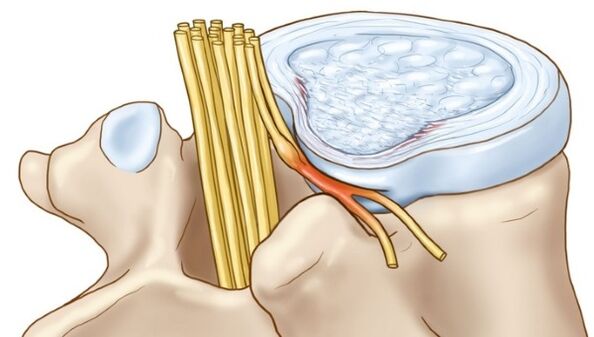
Regardless of the type of disease, the gap between the vertebrae decreases, leading to complications such as intervertebral protrusions or hernias.Pathological manifestations are often characterized by pinching of the endings of nerve impulses coming from the spinal cord.
Since the impact of static and dynamic loads on the thoracic region is much less than on the cervical and lumbar region, this type occurs less frequently than others.In this case, the physiological fixation of the muscular corset of the back with the help of ribs plays an important role.
Thoracic osteochondrosis in women, the symptoms of which do not differ much from diseases of the abdominal organs, is difficult to diagnose, therefore the correct diagnosis is most often made at later stages.
Any type of osteochondrosis of the thoracic region develops with dissection of the elements of the intervertebral disc, a decrease in their height, which leads to further pinching of the nerve endings.With the most advanced manifestations, the pathological process spreads to other parts of the spine.
Causes of disease
Currently, the exact factors contributing to the development of thoracic osteochondrosis have not been established.Experts from various fields have identified the relationship between many signs that can complexly influence the spread and manifestation of the pathological process.
So, the culprits can be mechanical, hormonal, vascular diseases as well as other types of diseases.Based on the studies and diagnostic measurements carried out, the simultaneous influence of several factors was identified, the common property of which is excessive load on the spine.
The most common reasons causing such overloads are:
- Inactive lifestyle and excess weight.Lack or complete absence of physical activity often leads to a weakening of the muscular structures of the back and intervertebral discs.Poor organization of the working space, which involves a sitting position of the body, often leads to the appearance of cervical osteochondrosis, which often progresses to the thoracic type.
- Injury and strength exercises.Excessive loads, especially improper technique for performing strength exercises, contribute to the appearance of degenerative-dystrophic changes in the thoracic spine region.Injuries or bruises of the spine can also lead to the development of a pathological process.
- Lack of proper diet, which includes particularly important vitamins and minerals.The lack of various mineral structures, especially calcium, leads to the destruction of the integrity of bone tissue.
- Various hormonal infectious diseases, including the toxicological effects of harmful substances.In this case, bone loss develops due to the interaction of harmful organic elements.

Thoracic osteochondrosis in women, the symptoms of which are difficult to diagnose at the initial stage, most often develops during pregnancy.
Carrying a fetus is characterized by a combination of several reasons that contribute to the development of the degenerative process - excessive stress on the spine and a constant need for useful minerals and vitamins.More than 80% of pregnant women report similar symptoms.
Risk factors
The main risk factor for the occurrence of osteochondrosis is a hereditary predisposition to the disease.So, if relatives have discovered degenerative changes in the intervertebral discs, it is necessary to adhere to preventive measures with a comprehensive examination 1-2 times a year.
The following factors increase the risks of developing thoracic osteochondrosis:
- congenital anomalies of the structure of the spine, including chronic lack of water and substances promoting plasticity of the joint surface;
- asymmetrical placement of anatomical spaces of intervertebral joints;
- impact of vibrations on the spine, particularly due to prolonged driving;
- smoking and alcoholism;
- psychosocial reasons, frequent stress;
- age over 45-50 years;
- chronic metabolic disorders;
- development of endocrinological pathologies;
- female

Cardiovascular diseases also affect the manifestation of osteochondrosis.Most often, these pathologies include vegetative-vascular dystonia, complications of which can affect not only the thoracic, but also the cervical vertebrae.
The most typical signs
Osteochondrosis of the thoracic region, although characterized by floating symptoms, in practice has a number of basic and most typical symptoms.
General manifestations indicating the development of a pathological process in men and women:
- Intercostal and thoracic neuralgia.It is characterized by the appearance of painful sensations localized in the chest.Depending on the type of manifestation, the pain can be sharp or throbbing.There is often compression that disrupts the breathing process, leading to symptoms such as coughing or shortness of breath.The painful sensations can also extend to the shoulder blades or back.In the presence of physical activity (bending, lifting weights, exercise) or poor body position, discomfort increases.
- Unpleasant sensations in the limbs or their individual parts.In this case, the patient feels a tingling sensation alternating with numbness in the arms or legs, particularly in the shoulders, wrists and fingers.In addition, a feeling of frozen limbs often manifests itself for no apparent reason, due to compression of neurovascular endings.
- Frequent dizziness and headaches.There may be blurred vision, headaches, or blurred vision due to pinched nerve endings.We often feel incomprehensible fatigue for no reason.Headaches are manifested by pressing headaches, intensifying with poor body position.
A severe form of the disease leads to various pathological disorders of normal blood circulation in all parts of the spine, including the pelvic region.Based on this, patients often complain of problems with blood pressure, characterized by a sharp increase or decrease.
Neurological symptoms may not appear immediately.So, the signs that precede the initial stage of the disease include pain when walking, as well as a feeling of stiffness when moving.Symptoms may subside and not bother the patient for weeks.
With the simultaneous development of thoracic and cervical osteochondrosis, there is a sensation of a foreign body in the respiratory tract, the manifestation of which intensifies with physical exertion or normal turns of the body.
Atypical symptoms
In addition to typical symptoms indicating the presence of thoracic osteochondrosisdepartment, in medical practice there are also atypical signs of the disease:
- Painful manifestations in the heart.In this case, the symptoms are more similar to heart disease, such as a heart attack or angina.The pain is dull or aching and can last for months.However, no vascular medication provided any improvement and the ECG results revealed no abnormalities.
- Discomfort in the mammary glands.Most often this manifests itself in women, characterized by persistent painful sensations.It can often be confused with diseases of the mammary glands.In this case, a more detailed diagnosis is necessary.
- Punctual spasms and pain in the abdominal cavity.It is distinguished by typical signs of various pathological processes in the organs of the gastrointestinal tract, which are often confused with gastritis, ulcers or cholecystitis.Intensifies with physical movements.

Experts have also identified two signs of thoracic osteochondrosis, which, if detected, can immediately indicate the development of the disease - the so-called dorsago and back pain.
Dorsago is a very sharp and intense pain in the chest, which intensifies when standing up or turning the body.Most often occurs against the background of prolonged lying or sitting.
In this case, the painful sensation may be so pronounced that it becomes difficult for the patient to return to normal breathing.It is often accompanied by excessive muscle tension and stiffness in movements.Dorsago is always short-term in nature.

Back pain is a long-lasting and less pronounced pain attack in the pathologically altered intervertebral discs.It appears in the evening and at night with sudden bends or deep breathing.The discomfort can last from 1 week to several months.
Characteristics of thoracic osteochondrosis in women
Although the signs of any type of osteochondrosis are the same in men and women, in practice there are certain pathological features directly related to the physiological structure of the body.
Popular symptomatic differences inherent in women:
- the manifestation of the first symptoms of thoracic osteochondrosis occurs later than in men, which is associated with the effect of the analgesic female hormone estrogen;
- direct dependence of the appearance of symptoms on the menstrual cycle and menopause;
- frequent transition from osteochondrosis to other pathological manifestations;
- accompaniment of typical signs of the disease with nervous breakdowns and hormonal changes, which occurs quite rarely in humans;
- the presence of constant headaches, regardless of the type of lesion;
An interesting and little-studied fact is that during thoracic and lumbar osteochondrosis, women may experience an increase in sexual desire, caused by the production of estrogen.At the same time, in men, libido is almost always characterized by a decrease or complete loss of functionality, due to impaired blood supply to the prostate tissue.
Degrees of thoracic osteochondrosis
Osteochondrosis of the thoracic spine is usually classified into several stages, depending on the course of the disease and the severity of degenerative disorders of the intervertebral discs.
In practice, there are 4 stages of the disease:
- First step.It is characterized by the appearance of cracks in the tissues of the annulus fibrosus, which leads to the penetration of the nucleus pulposus into its internal walls.As a result, the elasticity of the intervertebral discs is lost and protrusions may appear.Depending on the physiological characteristics, pain is present or absent.Reflexive tension in muscle tissue is often noted.
- Second step.It is characterized by further progression of the disease, which leads to complications such as a reduction in the height of the intervertebral discs, the elasticity of which is further lost.There is mobility between individual vertebrae, which leads to the development of a hernia.The pain intensifies and spreads to other parts, including neurological complications.
- Third step.The annulus fibrosus is characterized by a complete rupture, characterized by a complete exit of the nucleus pulposus beyond its limits.Intervertebral hernias form, causing neurovascular and muscular diseases.At this stage, scoliosis or kyphosis can already be diagnosed.There are often problems with sensitivity of the limbs, which can lead to complete numbness.
- Fourth step.The intervertebral discs completely lose their elasticity and the tissue structures surrounding the spine are destroyed.Dystrophy of bone tissue and vertebrae begins.Neurological symptoms are pronounced, the patient cannot do without supportive medications.
In addition to the main stages of osteochondrosis of the thoracic region, experts identify an additional classification that allows assessing the variability of damage to nerve endings.
Among these, there are 3 types:
- compression;
- reflex;
- myoadaptive.
Diagnosis
Thoracic osteochondrosis in women, the signs of which are not obvious, is most often diagnosed with difficulty.Based on this, a specialist can prescribe several complex diagnostic methods at once, allowing a comprehensive assessmentTo assess the patient's condition:
- X-ray of the thoracic spine.It allows you to assess the general condition of the intervertebral discs, determine the presence and size of bony growths and accurately measure the length of the vertebrae.This method also makes it possible to identify various dystrophic pathologies, including hernias and protrusions.
- Electromyography.Prescribed in the presence of neurological signs such as frequent dizziness, sudden pressure changes and pronounced migraine attacks.
- Laboratory research.They allow you to accurately determine the level of various chemical structures in the body, including calcium, the number of white blood cells and much more.This type includes: a general urine test, a biochemical blood cell test, and a blood serum test.
- Discography.Allows you to identify the exact contours of the corpus pulposum.Most often, it is carried out using a contrast agent.
- Investigation of violationsconductivity of nerve endings.
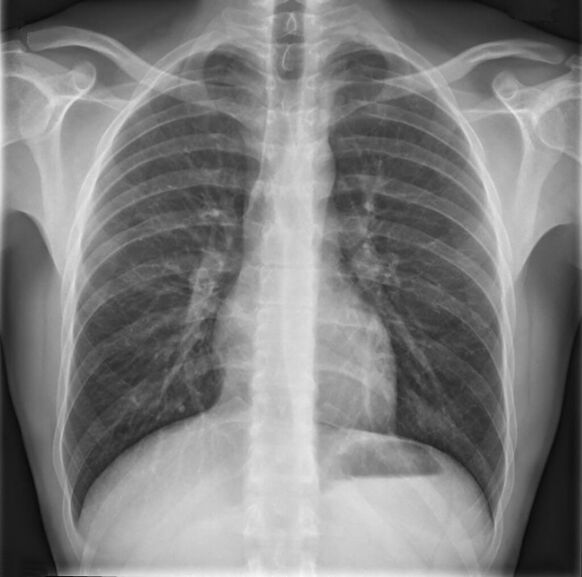
In addition to basic diagnostic methods, the patient may be prescribed studies such as MRI or CT scanning, which will allow a much more accurate assessment of the course of the pathological process.Electrocardiography is also often used, the indications for which are suspicion of cardiovascular diseases.
Since the pathological process can imitate various diseases, the patient is often prescribed an additional group of examinations - from myelography to gastroscopy.
Treatment methods
Treatment of any type of osteochondrosis takes place on an outpatient basis.Only in case of complications or unbearable pain is bed rest prescribed for 3-4 days.
It is important to understand that with osteochondrosis, irreversible disorders occur that cannot be eliminated.
Due to this, timely diagnosis of the pathological process allows you to select the most competent treatment, which will eliminate the future development of possible complications and transfer the pathology to the stage of remission.
Any therapeutic effect aimed at curing osteochondrosis should be complex, combining various treatment methods.This will have the most powerful effect on combating signs of the disease and preventing further degenerative and destructive changes in bone tissue and intervertebral discs.
Surgical intervention is required only in certain cases - with the development of a hernia or other more dangerous complications.
Self-medication is contraindicated.Any therapeutic method described must be agreed with the attending physician or other specialist.Each type of treatment offered has its own contraindications, which can harm the patient in the long term.
Drug treatment
Drug treatment forms the basis of therapy and must be carried out without fail.
The basis of this treatment is the use of the following types of drugs:
- oral - coated tablets, capsules;
- injection – injections into the skin, vein, or muscle;
- Products for external use - solutions, ointments, gels.
Drug therapy allows you to stop the development of the pathological process, eliminate pain, and also relax tense muscle tissues.Some groups of drugs improve metabolism, if possible restore previously damaged tissues of the cartilage and bone surface, and improve blood circulation.
The treatment plan is developed individually, depending on the complications and symptoms.At the same time, some types of drugs are general and are prescribed without fail, regardless of the patient's characteristics.
The following table describes the main groups of medications, including their detailed descriptions and effects:
| Pharmacological group | Description and methods of influence |
|---|---|
| Non-narcotic analgesics | They belong to the group of painkillers capable of eliminating various unpleasant sensations.These are relatively mild medications that cannot relieve severe pain.Available in the form of injections (fast acting with a short duration) and tablets (slow acting with a longer lasting effect). |
| Non-steroidal anti-inflammatory drugs (NSAIDs) | They allow you to quickly eliminate the development of the inflammatory process and reduce pain.In some cases, they can increase the mobility of the joint-muscular surface.Available in tablets, injections and ointments.These are the most effective medications, but they cause a number of side effects, especially in pregnant women.Therapy lasts on average 1 to 2 months. |
| Muscle relaxers | Intended to relieve muscle tissue spasms and have an analgesic effect.Usually used instead of NSAIDs, due to the absence of serious contraindications and side effects.In this case, the treatment lasts approximately 3 months, the first effects are observed after 1 week of administration. |
| Chondroprotectors | Promote the regeneration of cartilaginous-articular tissues, help restore the former elasticity of the intervertebral discs.Available in the form of ointments, injections or tablets.Although treatment is effective, it takes a long time – on average several years or more. |
| Vitamin and mineral complexes | Preparations based on vitamin structures help restore tissues and normalize metabolism.In some cases, they can eliminate the symptoms of neurological pathologies.Used in combination with other medications. |
| Drugs that promote vasodilation | They have a beneficial effect on the body's metabolic processes, reduce muscle tone and restore natural vascular circulation.Treatment is carried out for up to 1 month, depending on the individual characteristics of the patient. |
If the main groups of drugs have no effect, the patient is prescribed injection blockages, the use of which should be carried out strictly by a specialist.With the correct technique of use, improvement occurs immediately after the injection.
Physiotherapy
Physiotherapy for thoracic osteochondrosis is one of the most effective methods of therapeutic intervention.The main feature of any physiotherapeutic method is its localized therapeutic effect, which does not affect other important tissues and organs.This allows the use of physiotherapy for pregnant women, the elderly and children.
Basic physiotherapeutic methods:
- Shock wave method.It is characterized by the impact of a directed acoustic wave on the bone and muscle tissues of the thoracic region.Helps reduce pain, speed up the recovery process and improve blood circulation.
- Detensor therapy.This is a gentle relaxation method using natural stretching of the spine using specialized inclined mattresses.Has an effective “unloading” effect on the intervertebral discs.
- Magnetotherapy.Application of low frequency electromagnetic waves.Eliminates inflammatory processes inside dystrophic tissues, helps relieve pain and muscle spasms.
- Ultrasonic method.Exposure to a vibrating ultrasound field, which helps reduce painful manifestations, allowing more effective absorption of medications.
Acupuncture, laser therapy and quartz therapy also work well.No physiotherapy method can cause allergic reactions in a person or aggravate existing diseases.
Manual therapy and massage
A properly selected specialist in the field of manual therapy can have a beneficial effect on the physiological state of a patient with osteochondrosis.So, with the help of special techniques, it is possible to significantly reduce pain, ensure blood circulation to painful tissues and eliminate tissue and muscle spasms.
Today, the most popular technique is post-isometric muscle relaxation.This method is characterized by muscle tension followed by relaxation.

Thoracic osteochondrosis in women, the symptoms of which are treated by various methods, responds well to massage therapy, especially plastic and vibration types.You can do it at home, but it is better to seek the services of specialists to achieve the most effective result.The massage must be carried out in courses over several weeks.
Exercise therapy
Contrary to popular belief, experts do not agree on the advisability of doing a set of exercises during exacerbations of thoracic osteochondrosis.However, at the time of remission, as well as for prevention, exercise therapy has an effective effect on the general tone of the patient, strengthening weak spinal muscles.There are many similar complexes.
Typical exercises are:
- Lie on your back, hands behind your head.Lift your chest as high as possible and stay in this position for 8 to 10 seconds.Then return to the starting position.Repeat at least 10 times in 2 sets.
- Standing position, feet shoulder-width apart.Perform several forward, backward and side bends 10 to 15 times.With the right technique, exercise helps stretch muscle tissue, which improves blood circulation.
- “On all fours” position.Try to arch your back as low as possible, tilting your head back.You should stay in this position for at least 5-8 seconds and then return to the starting position.Repeat 15 times for 2 approaches.

Almost all exercise therapy complexes do not have a high level of complexity.But certain contraindications can worsen the patient's condition.These include protrusions, hernias or inflammations.If discomfort and pain occur, exercise therapy should be suspended.
Forecast
Osteochondrosis of any type is characterized by a variable course of the disease, during which periods of remission alternate with phases of exacerbation of painful symptoms.If treatment is started on time, any type of degenerative disorder, including breast diseases, is characterized by a favorable prognosis for both women and men.